
Are You Looking For a Physiotherapist In North Parramatta, New South Wales?
When it comes to your health, we are committed to delivering dedicated, evidence-based care tailored to your needs.
At North Parramatta Physiotherapy & Sports Injuries, we combine clinical expertise with genuine care to provide results-driven physiotherapy that puts you first.
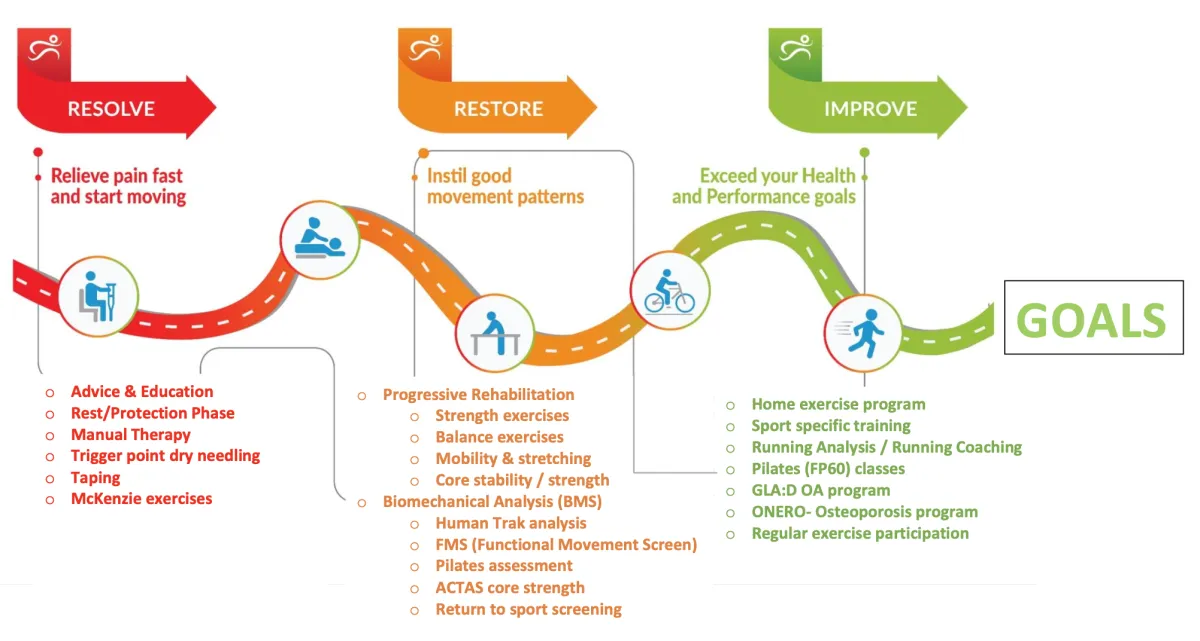
Our experienced team doesn’t just treat symptoms, we pride ourselves on our pain to performance approach to client care where we take the time to understand the root cause of your pain and create a personalised plan to help you move better, feel stronger and get back to what you love. Our model is relieving symptoms, restoring function and improving your long term health.
Because it's not just about living longer—it's about living well. Prioritising your health span means staying active and independent for as many years as possible.
Make your health a priority and book an appointment with one of our expert physios and take the first step towards better health.
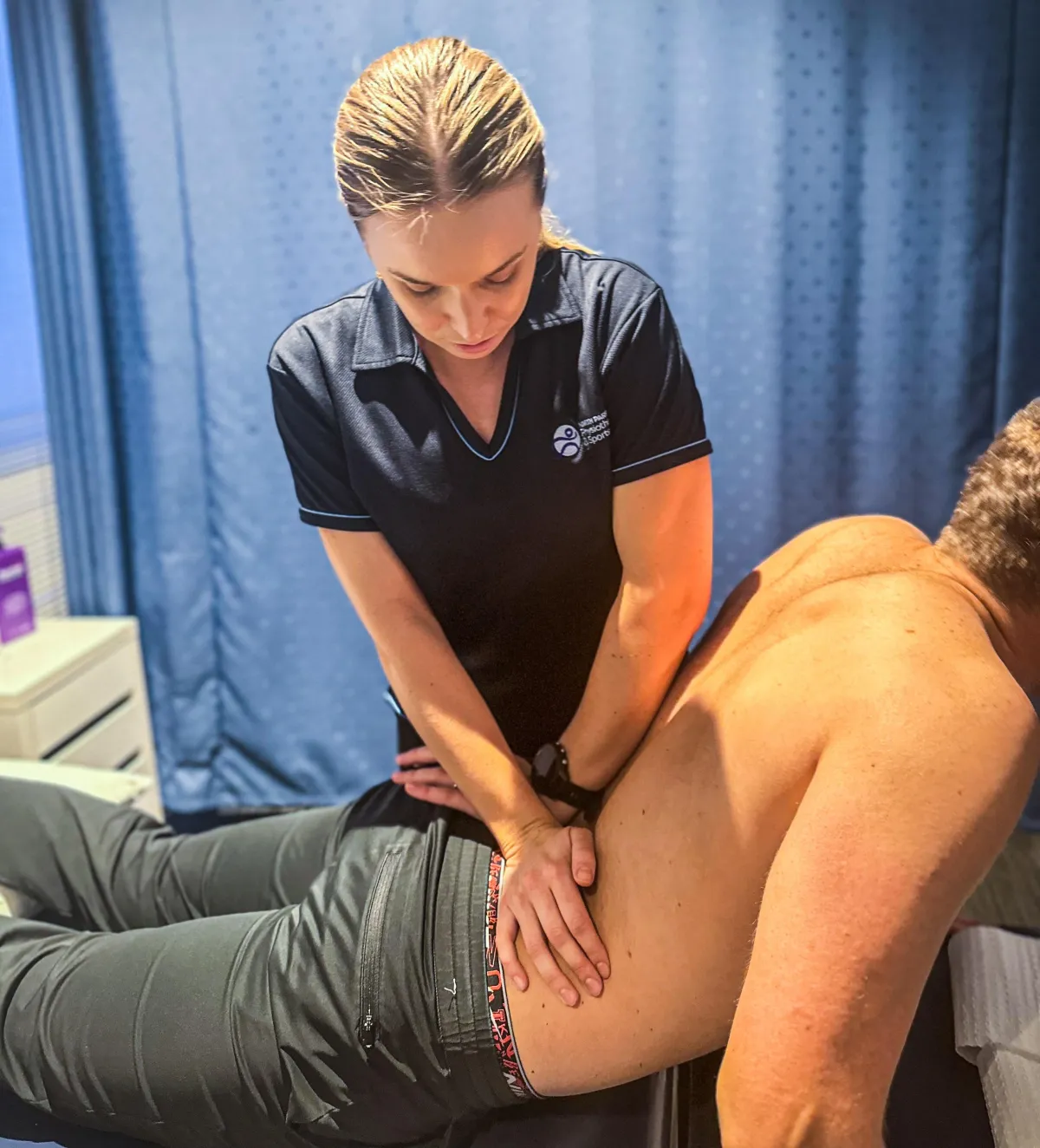
We have been an established sports physiotherapy practice in North Parramatta for 30 years, and are an integral member of the Parramatta community and all levels of local sports.
What Sets Us Apart?
Evidence Based Practice – we use the MDT or McKenzie approach to Musculo-skeletal treatments.
We have 44 small group exercise classes per week – Clinical Pilates, ONERO (Osteoporosis) and GLAD (Arthritis).
We pride ourselves on our Pain to Performance model – to encourage all our clients to achieve their goals.
Commitment to Learning – even with our wealth of experience, we are always looking to improve.
To book a class, please make sure to click on the booking link. This is the only way to secure your spot and ensure your reservation is confirmed.
We appreciate your cooperation and look forward to seeing you in class!
How Can We Help?
At North Parramatta Physiotherapy we treat a wide range of conditions from everyday aches to complex injuries. Whether you're dealing with a recent injury or something that’s been nagging you for a while, our experienced physiotherapists can help you understand the cause and work towards lasting relief.
We commonly help clients with:
Back pain – from stiffness and postural strain to disc injuries and sciatica
Neck pain & headaches – including tension, whiplash and desk-related strain
Shoulder pain – such as rotator cuff issues, bursitis and frozen shoulder
Knee pain – from ligament injuries and arthritis to patellofemoral pain
Hip & pelvic pain – affecting movement, stability or sleep
Ankle & foot problems – including sprains, Achilles issues and plantar fasciitis
Post-surgical recovery – regain strength and mobility after orthopaedic surgery
Sports injuries – from sprains and strains to overuse injuries
Balance and dizziness issues – including BPPV and vestibular dysfunction
Confused about your pain and not sure what to do?
Get clear, professional advice in our free downloadable information packs
Back Pain
Understand why back pain happens and how to help it
Shoulder Pain
Understand why shoulder pain happens and how to help it
Knee Pain
Understand why knee pain happens and how to help it
Contact us today to speak with our friendly team and find out how we can help you feel your best
Latest Tips and Advice

Spring Into Movement: Simple Ways to Get Active and Invest in Your Long-Term Health
Spring is here, and with warmer weather, longer days and a little more sunshine, it can be the perfect time to get moving.
Whether you’ve been less active over winter, you’re thinking about returning to an old hobby, or you simply want to make movement a bigger part of your everyday life, you don’t need to completely overhaul your routine to make a difference.
Regular physical activity can benefit our health at every stage of life. The key is finding something you enjoy, starting at a level that works for you and building habits you can maintain well beyond spring.
Why movement matters for our long-term health
Being active isn’t just about fitness or changing how we look. Regular movement plays an important role in our overall physical and mental wellbeing.
Over the long term, regular physical activity can support heart and cardiovascular health, muscle and bone strength, balance, mobility and healthy weight management. It is also associated with a reduced risk of a range of chronic health conditions.
Exercise can benefit our mental wellbeing too, supporting mood, sleep and overall quality of life.
And while structured exercise is valuable, being active doesn’t have to mean spending hours in the gym. Walking the dog, swimming, cycling, gardening, playing sport, dancing or heading out for a weekend bushwalk can all help get your body moving.
So, if spring has inspired you to become a little more active, where should you start?
1. Start with something you actually enjoy
The best form of exercise is often the one you’re happy to keep doing.
If running isn’t for you, don’t force yourself to become a runner just because it feels like the obvious way to get fit. You might prefer swimming, Pilates, cycling, strength training, tennis, golf, walking or joining a local sporting club.
Spring is also a great opportunity to try something completely new. You might discover an activity you look forward to rather than something you feel you have to do.
2. Build up gradually
Feeling motivated is great, but going from very little activity to exercising every day can be a big change for your body.
If you’ve had a quieter winter, give yourself time to adjust. Start with shorter or less intense sessions and gradually increase how much you’re doing.
For example, if your goal is to start walking regularly, you might begin with a few 20-minute walks each week before increasing the distance or frequency.
Consistency over time is generally more useful than trying to do everything in the first week.
3. Make movement part of your day
Not all physical activity needs to happen during a designated workout.
Think about the small opportunities you have to move throughout your day. Could you take a walk during your lunch break? Walk to the local shops? Take the stairs? Meet a friend for a walk instead of sitting at a café? Spend some time in the garden after work?
These little bursts of activity can add up and can be particularly helpful if you spend much of your working day sitting.
4. Don’t forget about strength
Walking and cardiovascular exercise often get most of the attention when we decide to become more active, but maintaining our strength is important too.
Strength training can help maintain muscle mass, support our bones and joints and make everyday activities such as carrying shopping, climbing stairs, gardening and playing with the kids or grandkids easier.
Strength exercise doesn’t necessarily require a gym membership either. Depending on your ability, bodyweight exercises, resistance bands, weights and exercise classes can all be options.
5. Set yourself a spring goal
Having something to work towards can make staying active more enjoyable.
Your goal doesn't need to be running a marathon. It could be completing a local 5 km walk, going for three walks each week, returning to social tennis, being able to comfortably walk a favourite bush track or attending an exercise class consistently.
Choose something meaningful to you and focus on the progress you make along the way.
6. Make it social
Movement can be much easier to stick with when it doubles as social time.
Ask a friend to join you for a morning walk, sign up for a class with a family member, join a local sports club or organise an active weekend outing.
Having someone else involved can provide motivation and accountability — and make exercise feel less like a chore.
7. Give your body time to adapt
A little muscle soreness can occur when you start an unfamiliar activity, but persistent or increasing pain is worth paying attention to.
If an old injury is making it difficult to exercise, or pain is stopping you from doing an activity you'd like to enjoy, consider getting some guidance rather than simply giving up on movement altogether.
A physiotherapist can assess how you're moving and help identify appropriate ways to gradually build your strength, mobility and physical capacity.
Think beyond spring
Perhaps the most important tip is not to think of exercise as a short-term health kick.
Australia's physical activity guidelines encourage adults to be active regularly, including a combination of moderate-to-vigorous physical activity and muscle-strengthening activities. But you don't need to reach your ultimate goal immediately.
Think of spring as your starting point.
Find activities you enjoy. Move a little more often. Build gradually. Get stronger. Spend time outside. And focus on creating habits that you can carry through summer, autumn, winter and into the years ahead.
Because ultimately, staying active isn't just about what your body can do today — it's an investment in keeping you moving, independent and doing the things you love for years to come.
Ready to get moving this spring?
If pain, an old injury or uncertainty about where to begin is holding you back, our physiotherapy team can help you find a way to move that suits your body, your goals and your lifestyle.

We’re proud to be connected with trusted professional affiliations and community partners.







North Parramatta Physiotherapy & Sports Injuries is powered by Vitala Health, a group of Allied Health Practices across New Zealand and Australia.
Vitala Health provides clinical solutions that supports clients health and lifestyle needs through best practice treatment, premium facilities, education and ongoing commitment to customer service. Learn more about Vitala Health
If you have any questions before scheduling an appointment or for general enquiries, please use the contact us. Our team will promptly reach out to assist you.
Opening Hours
Monday: 7am - 7pm
Tuesday: 7am - 7pm
Wednesday: 7am - 7pm
Thursday: 7am - 7pm
Friday: 7am - 5pm
Saturday: 8am - 12pm
Sunday: Closed



Follow Us
The Clinic
Common conditions
North Parramatta Physiotherapy & Sports Injuries
© Copyright 2026 Vitala Health. All Rights Reserved.
Facebook
Instagram